
$22.90
Add to Cart
Catalpa, Catalpa speciosa, Northern, Tree Seeds, (Fast, Showy, Hardy) 200 Seeds
8 available
Details
Shipping: US-Mainland: free (more destinations)
Condition: Brand new
Returns: 7 days, seller pays return shipping (more)


Catalpa, Catalpa speciosa, (Northern Source), Tree Seeds.(5)
Fast Growth, Showy Flowers, Showy Fruits, Shade Tree, Street Tree, Cold, Heat, Drought and Urban Tolerant
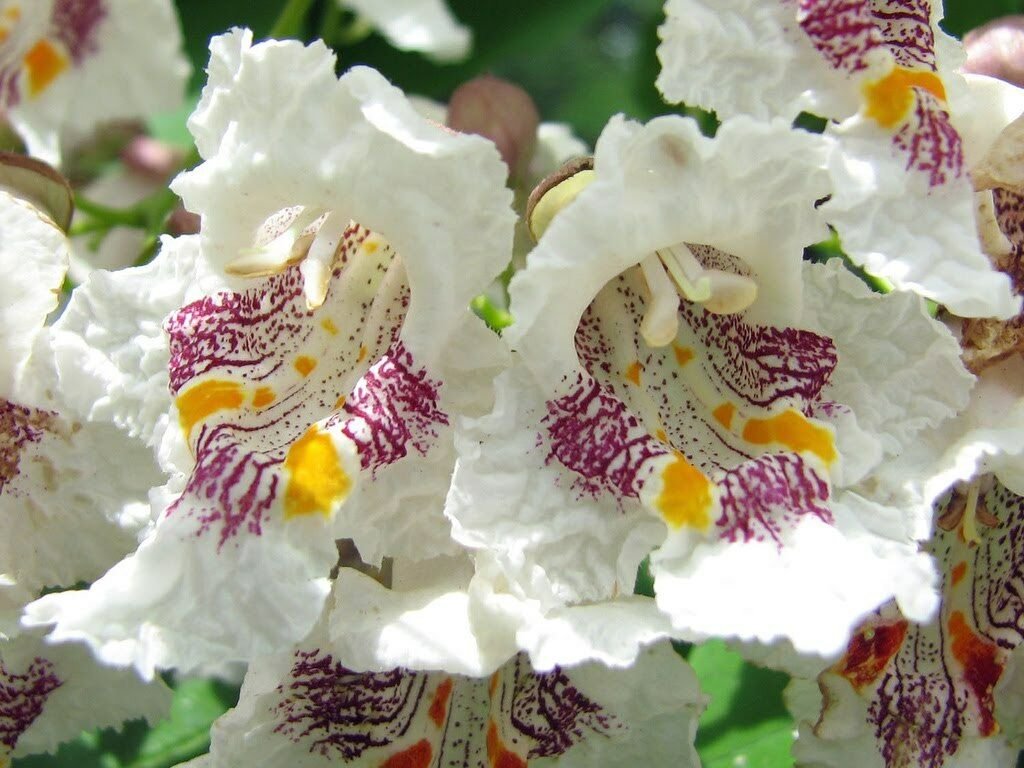
Northern Catalpa is a medium to large, deciduous tree that typically grows to 40 to 70 feet tall with an irregular, open-rounded to narrow-oval crown. It is native to a relatively small area extending from Tennessee, Arkansas, Missouri, Illinois and Indiana. Broad ovate to ovate-oblong leaves to 12 inches long are pointed at the tips and rounded to cordate at the bases, giving a heart shaped look. Leaves are light green to yellow green above and densely pubescent below. The Catalpa Tree is the last tree to grow leaves in the spring. The leaves generally do not color in autumn before falling, instead, they either fall abruptly after the first hard freeze, or turn a slightly yellow-brown before dropping off. The Catalpa flowers can be a real showstopper. Bell-shaped, orchid-like white flowers to 2 inches long with purple and yellow inner spotting appear in panicles in late spring. Flowers give way to long slender green seedpods 12 to 22 inches long. The seedpods mature in fall to dark brown and then split open lengthwise to release the seeds within. Seedpods give rise to the common name of Cigar Tree, although they actually are longer and thinner than most cigars. Abundant pods are produced every 2 to 3 years. Bark of mature trees are fissured, prominently ridged and pale gray-brown. The leaves of this species do not emit an unpleasant aroma when bruised as is the case with the similar southern catalpa (Catalpa bignonioides).
A mature, symmetrically rounded Catalpa Tree can be a tree of great beauty, particularly in spring when the foliage is young and the flowers are in bloom. It has been widely planted in urban areas as a street tree and lawn tree and can also be effectively used in the landscape for difficult areas such as moist low spots or dry areas with poor soils.
Leaf: Whorled (or opposite, when whorled one of the three leaves is often smaller), cordate, 5 to 12 inches long, pinnately veined, entire margins, overall soft and flexible feeling, light green to green above and soft pubescence on the underside.
Flower: Monoecious; very showy, white (yellow and purple spots on insides), 5 fuzzed petals form an overall bell shape, 1 inch long; appear in open, branched, upright terminal cluster (8 to 12 inches long) in late spring.
Fruit: Long (10 to 18 inches) bean-like, hanging capsules, round in cross section, very stiff; each capsule contains numerous flattened seeds with 2-papery, fringed wings; the seeds mature in autumn, but the capsule may remain attached over winter.
Twig: Stout, green, and later reddish brown in color, numerous lighter lenticels; terminal bud is absent, lateral buds are small and covered with red-brown scales; leaf scars very unique elliptical or round sunken saucers, light in color.
Bark: Gray to reddish brown, separated into irregular shallow fissures and scaly ridges.
Form: A medium sized tree to 80 feet with spreading, crooked branches and an irregular crown. The bole may be straight but is generally crooked.
Other Names: Northern Catalpa, Hardy Catalpa, Western Catalpa, Cigar Tree, Catawba Tree
Zone: 4 to 8
Growth Rate: Fast
Plant Type: Medium Sized Deciduous Tree
Family: Bignoniaceae
Native Range: United States
Height: 40 to 70 feet
Spread: 20 to 50 feet
Shape: Rounded to Irregular
Bloom Time: May to June
Bloom Color: White
Sun: Full Sun to Part Shade
Fall Color: None to Yellow
Drought Tolerance:
Water: Medium to Wet
Maintenance: Medium
Site Requirements /Soil Tolerances: Easily grown in average, medium to wet, well-drained soils in full sun to part shade. Tolerant of a wide range of soil conditions including both wet and dry soils. Tolerant of seasonal flooding. Prefers moist fertile loams.
Sowing Catalpa speciosa Seeds:
For best results, please follow the instructions in the order provided.
Scarify: Soak in water for 24 hours
Stratify: Cold 0-30 days, 40 Degrees F in a Moist Medium (Not wet).
Germination: Sow 1/4” Deep, Keep moist, (Not wet).
Fast Growth, Showy Flowers, Showy Fruits, Shade Tree, Street Tree, Cold, Heat, Drought and Urban Tolerant
Northern Catalpa is a medium to large, deciduous tree that typically grows to 40 to 70 feet tall with an irregular, open-rounded to narrow-oval crown. It is native to a relatively small area extending from Tennessee, Arkansas, Missouri, Illinois and Indiana. Broad ovate to ovate-oblong leaves to 12 inches long are pointed at the tips and rounded to cordate at the bases, giving a heart shaped look. Leaves are light green to yellow green above and densely pubescent below. The Catalpa Tree is the last tree to grow leaves in the spring. The leaves generally do not color in autumn before falling, instead, they either fall abruptly after the first hard freeze, or turn a slightly yellow-brown before dropping off. The Catalpa flowers can be a real showstopper. Bell-shaped, orchid-like white flowers to 2 inches long with purple and yellow inner spotting appear in panicles in late spring. Flowers give way to long slender green seedpods 12 to 22 inches long. The seedpods mature in fall to dark brown and then split open lengthwise to release the seeds within. Seedpods give rise to the common name of Cigar Tree, although they actually are longer and thinner than most cigars. Abundant pods are produced every 2 to 3 years. Bark of mature trees are fissured, prominently ridged and pale gray-brown. The leaves of this species do not emit an unpleasant aroma when bruised as is the case with the similar southern catalpa (Catalpa bignonioides).
A mature, symmetrically rounded Catalpa Tree can be a tree of great beauty, particularly in spring when the foliage is young and the flowers are in bloom. It has been widely planted in urban areas as a street tree and lawn tree and can also be effectively used in the landscape for difficult areas such as moist low spots or dry areas with poor soils.
Leaf: Whorled (or opposite, when whorled one of the three leaves is often smaller), cordate, 5 to 12 inches long, pinnately veined, entire margins, overall soft and flexible feeling, light green to green above and soft pubescence on the underside.
Flower: Monoecious; very showy, white (yellow and purple spots on insides), 5 fuzzed petals form an overall bell shape, 1 inch long; appear in open, branched, upright terminal cluster (8 to 12 inches long) in late spring.
Fruit: Long (10 to 18 inches) bean-like, hanging capsules, round in cross section, very stiff; each capsule contains numerous flattened seeds with 2-papery, fringed wings; the seeds mature in autumn, but the capsule may remain attached over winter.
Twig: Stout, green, and later reddish brown in color, numerous lighter lenticels; terminal bud is absent, lateral buds are small and covered with red-brown scales; leaf scars very unique elliptical or round sunken saucers, light in color.
Bark: Gray to reddish brown, separated into irregular shallow fissures and scaly ridges.
Form: A medium sized tree to 80 feet with spreading, crooked branches and an irregular crown. The bole may be straight but is generally crooked.
Other Names: Northern Catalpa, Hardy Catalpa, Western Catalpa, Cigar Tree, Catawba Tree
Zone: 4 to 8
Growth Rate: Fast
Plant Type: Medium Sized Deciduous Tree
Family: Bignoniaceae
Native Range: United States
Height: 40 to 70 feet
Spread: 20 to 50 feet
Shape: Rounded to Irregular
Bloom Time: May to June
Bloom Color: White
Sun: Full Sun to Part Shade
Fall Color: None to Yellow
Drought Tolerance:
Water: Medium to Wet
Maintenance: Medium
Site Requirements /Soil Tolerances: Easily grown in average, medium to wet, well-drained soils in full sun to part shade. Tolerant of a wide range of soil conditions including both wet and dry soils. Tolerant of seasonal flooding. Prefers moist fertile loams.
Sowing Catalpa speciosa Seeds:
For best results, please follow the instructions in the order provided.
Scarify: Soak in water for 24 hours
Stratify: Cold 0-30 days, 40 Degrees F in a Moist Medium (Not wet).
Germination: Sow 1/4” Deep, Keep moist, (Not wet).
You may also be interested in:
-
$19.10
-
$8.49
-
$8.09
-
$16.00

-
$18.00

-
$16.00
-
$13.18

-
$12.25

-
$11.99
-
$15.35


