
$12.00
Add to Cart
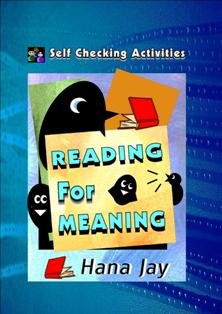
Reding for Meaning
More than 10 available
Details
Shipping: US-Mainland: free (more destinations)
Condition: Brand new
*The store has not been updated recently. You may want to contact the merchant to confirm the availability of the product.
Learn to read, to spell and to extract the meaning.
This book promotes the development and enrichment of the student's reading and spelling. It contains liberally repeated spelling patterns sequenced in difficulties.
The aim is o derive meaning. Meaningful reading is easier to decode, categorise and generalise.
The emphasis is on controlled vocabulary, sequenced in difficulty and on
predictable and easy to decode text.
As most of the words used are already in the student's vocabulary comprehension becomes automatic.
The activities do not neccesserily require writing so that the tasks could be performed with undivided attention to visual discrimination, recall and comprehension of printed words. Writing often distracts the young reader from decoding the print fluently and accurately.
Suggested activities:
• Join the questions with the answers (no writing).
• Use the LUK box to answer questions by joining the answers with the code numbers and place the tiles on the correct code numbers in the LUK box. (Page V for how to use the LUK box).
• Write the answers and use the LUK box to check if the answers are correct.
This book promotes the development and enrichment of the student's reading and spelling. It contains liberally repeated spelling patterns sequenced in difficulties.
The aim is o derive meaning. Meaningful reading is easier to decode, categorise and generalise.
The emphasis is on controlled vocabulary, sequenced in difficulty and on
predictable and easy to decode text.
As most of the words used are already in the student's vocabulary comprehension becomes automatic.
The activities do not neccesserily require writing so that the tasks could be performed with undivided attention to visual discrimination, recall and comprehension of printed words. Writing often distracts the young reader from decoding the print fluently and accurately.
Suggested activities:
• Join the questions with the answers (no writing).
• Use the LUK box to answer questions by joining the answers with the code numbers and place the tiles on the correct code numbers in the LUK box. (Page V for how to use the LUK box).
• Write the answers and use the LUK box to check if the answers are correct.


